Specifications
Highlights
Project components
A hollow cathode is the electron source of a Hall effect thruster. Inside a heated tube, a small gas flow is ionised and emits a dense stream of electrons into the discharge channel. These electrons neutralise the ion beam and sustain the plasma inside the thruster. It is one of the most delicate components and requires precise thermal control and material selection.

A Hall effect thruster accelerates ions using a radial magnetic field and an axial electric field. Electrons are trapped in a circular motion, ionise the propellant and create a stable plasma region. The ions are then accelerated outwards at very high speed to generate thrust. This technology is widely used for satellites due to its high efficiency and long lifetime.

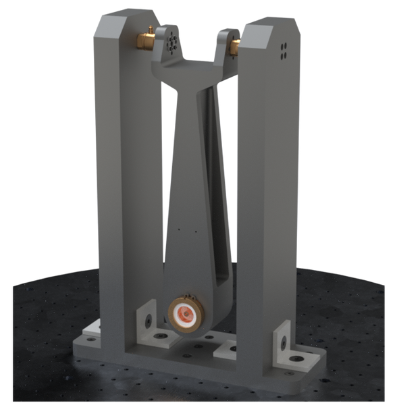
A thruster only matters if you can measure it, qualify it and fly it. Our system integration work covers everything needed to bring plasma engines into real mission environments. This includes the full integration of our pulsed plasma thruster into a one point five unit Cubesat frame, the development of precision thrust measurement setups and the design of test benches for the next generation of Hall and arcjet systems. This branch ensures that every engine we build can be characterised, compared and prepared for future in orbit demonstrations.